Tag: Intelligent Design

  • Intelligent Design, Biological Order, and Theological Implications in the Development of Silver Carp Gill Rakers

    Intelligent Design, Biological Order, and Theological Implications in the Development of Silver Carp Gill Rakers

    One of the central questions in contemporary philosophy of science is whether the complex, functional order observed in biological systems is merely the outcome of blind, unguided processes or whether it may point to an underlying rationality and intentional design. The present biological study on the development of gill rakers in silver carp, while firmly situated within developmental biology and transcriptomics, offers empirical findings that naturally lend themselves to interpretation within the framework of Intelligent Design and, at a deeper level, theological reflection on God.
    The first striking feature of this study is the highly coordinated genetic regulation underlying gill raker development. The authors reported more than 10,000 differentially expressed genes whose expression changes were not random but were significantly enriched in specific molecular pathways, such as focal adhesion, ECM–receptor interaction, and PI3K–Akt signalling. From a philosophical perspective, such large-scale coordination suggests a level of systemic organisation that exceeds expected, stochastic genetic fluctuations. Instead, the data reveal a tightly integrated genetic network in which individual components derive their meaning and function only within the context of the whole network. In the Intelligent Design discourse, this is often described as organised complexity—a hallmark of systems shaped by informational order rather than chance alone.
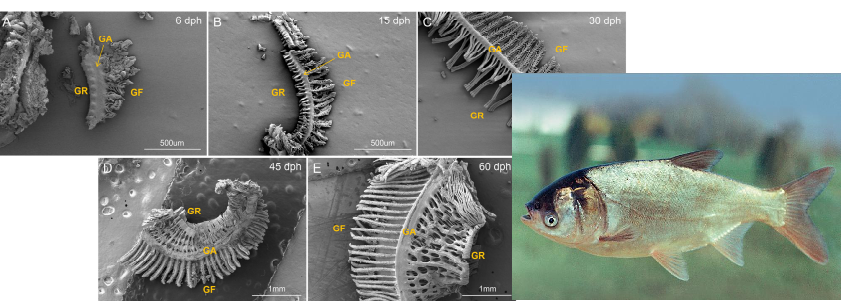
    The second important observation concerns the directional transition from simple to complex functional structures. Scanning electron microscopy demonstrated that gill rakers develop from sparse, rudimentary protrusions into a dense, interlocking mesh optimised for filter feeding. Crucially, this transformation is not merely an increase in complexity but an increase in functional coherence. Each developmental stage is viable and appropriate to the organism’s dietary needs at that moment, while simultaneously preparing a structural foundation for the next stage. Such a stepwise yet goal-oriented progression aligns with what proponents of design call teleological continuity: not only is the final structure functional, but the developmental pathway itself appears to be rational and efficient.
    Third, thiss study highlights the concerted action of independent gene familie, , notably collagen and integri, s, in constructing a single, unified biological structure. These gene families perform distinct roles; however,ever, their synchronized upregulation enables extracellular scaffolding, cell adhesion, and migration to occur in precise harmony. Systems in which multiple components must be present and properly coordinated to yield any functional outcome are often cited in the the Intelligent Design literature as examples of interdependent systems. Such systems challenge explanations based solely on gradual, unguided accumulation because partial or uncoordinated expression would fail to produce a functional advantage.
    Fourth, there is a direct link between genes, morphology, function, and ecology. The authors explicitly state that their findings bridge the fields of developmental biology, evolutionary biology, and ecology. This statement has philosophical significance beyond its empirical content. This suggests that biological reality is not composed of disconnected layers but rather forms a coherent, multi-level unity. In natural theology, such coherence has traditionally been interpreted as a sign of an overarching rational principle or an organizing intelligence underlying natural processes.
    From a theological perspective, these findings are especially compatible with the view of God not as a sporadic supernatural intervener but as the ground of order, information, and lawful regularity in nature. In this framework, God does not replace scientific explanations but makes them possible through divine action. Molecular pathways, genetic information, and self-organizing developmental processes can be understood as expressions of deeper rationality embedded in the fabric of life itself. The existence of such finely tuned systems raises the question of whether material causes alone provide a sufficient ultimate explanation.
    Importantly, this interpretation does not deny the existence of evolutionary processes or empirical biology. Rather, it asks whether evolution itself may operate within a preexisting informational and rational framework. The study shows that developmental outcomes depend on the precise timing, regulation, and interaction of molecular systems—features that strongly resonate with the idea that biological life is structured by intelligible principles rather than mere contingency.
    In conclusion, although this study focuses on a specific biological structure, the gill rakers of silver carp, it presents a broader picture of life as integrated, goal-directed, and information-rich. Although it does not constitute empirical proof of God, it challenges purely reductionist interpretations of biological order. At the intersection of science, philosophy, and theology, such findings invite renewed reflection on whether the most comprehensive explanation of biological complexity ultimately points beyond matter to the mind and beyond the mechanism to meaning.
  • Theological Reflection: The Astonishing Link Between Mitochondria and Human Copper Homeostasis

    Theological Reflection: The Astonishing Link Between Mitochondria and Human Copper Homeostasis

    nsitive and finely tuned nature of living systems.

    Even staunch evolutionary biologists now concede that the smallest deviation in copper levels can cause severe pathology. This implies that the system had to be fully functional and perfectly calibrated from the very beginning; it could not have arisen gradually through random, stepwise mutations.

    The scientific literature describing these mechanisms never mentions “evolution.” It simply documents extraordinarily complex and precise systems in which even minute disturbances (in copper concentration or mitochondrial performance) can result in cell death or disease. This is exactly the kind of irreducibly complex system demanded by the Intelligent Design theory: systems that cannot possibly have emerged gradually and must have been fully designed from the outset.

    Imagine, for a moment, that the universe truly arose by blind chance and had no creator. Long before mitochondria could “evolve” the ability to precisely regulate intracellular copper, every human would have died from copper toxicity, rendering reproduction and survival impossible. The human body is fragile yet filled with countless intricately balanced mechanisms, and the slightest deviation in any critical parameter can cause total collapse. Yet we exist. This undeniable fact proves that the universe has an all-powerful Creator who, with infinite wisdom and power, continually sustains every detail of existence.

    As Allah, the Exalted, states in the Qur’an:

    Surah Al-Furqan (25:2) He to whom belongs the dominion of the heavens and the earth and who has not taken a son and has not had a partner in dominion and has created each thing and determined it with [precise] determination. (Translation source: https://quranenc.com/en/sura-25#2)

    Surah Al-Infitar (82:6-7) O mankind, what has deceived you concerning your Lord, the Noble, Who created you and proportioned you and balanced you. (Translation source: https://quranenc.com/en/sura-82#6-7)

  • Theological discussion on anti-cancer genes

    Theological discussion on anti-cancer genes

    Anti-cancer genes explained simply
    There are genes in our body that act as guardians, preventing cells from becoming cancerous. These genes, known as anti-cancer or tumor suppressor genes, play a crucial role in maintaining the body’s health. They control cell growth, repair DNA damage, and, if necessary, eliminate damaged cells to prevent tumor formation. When these genes malfunction due to mutations or damage, the likelihood of cells becoming cancerous increases.

    TP53 gene: The body’s primary guardian
    One of the most important anticancer genes is TP53, which produces a protein called p53. This protein is activated when the DNA of a cell is damaged or under abnormal conditions. p53 either prompts the cell to repair itself or, if the damage is too severe, destroys it to prevent cancer development. However, if this gene is impaired, damaged cells can grow uncontrollably and become cancerous. This occurs in over half of all cancers, such as breast, lung, and brain cancers.

    BRCA1 and BRCA2 genes: Protectors of body cells
    Two other well-known genes, BRCA1 and BRCA2, also protect cells from cancer development. These genes help to repair damaged DNA. If someone inherits mutations in these genes, their risk of developing breast, ovarian, or even prostate cancer significantly increases. Women with these mutations may have up to a 70% chance of developing breast cancer in their lifetime. Genetic testing can now detect this risk early, allowing for the implementation of preventive measures.

    PTEN gene: Regulator of cell growth
    The PTEN gene is another anticancer gene that prevents excessive cell growth. If this gene fails to function properly, pathways in the body are activated, leading to rapid, uncontrolled cell growth. This can result in cancers such as prostate, uterine, and certain brain tumors. Research suggests that restoring the function of this gene could potentially stop cancer growth.

    APC gene: Protector of the colon
    The APC gene plays a vital role in maintaining intestinal health. It prevents excessive cell growth in the colon. If the APC gene malfunctions, numerous polyps may form in the colon, which can eventually develop into colorectal cancer. In some families, mutations in this gene are inherited, significantly increasing the risk of colorectal cancer.

    Theological perspective
    One of the beautiful aspects of the universe’s creation is that all elements contributing to life’s order are integrated into the grand design of creation. For example, without these anti-cancer genes, all living beings and humans would perish due to continuous and repeated mutations. Some may attribute this to evolution, but it must be noted that in a random universe with an evolutionary process absent a Creator, all living beings would perish due to successive mutations, lacking the opportunity to reproduce.
    Imagine if the world had arisen by chance—how would cells know to incorporate anti-cancer genes to avoid mutations. Even if a cell had experienced cancer multiple times and recognized and incorporated these genes into its genome, no cells would remain to sustain life or pass on to future generations, as they would perish before reaching the stage of identifying and combating cancer.
    Thus, there must inevitably be an external observer of the universe who facilitates the formation of genes that sustain weaker cells and even aid their evolution. Even when considering evolution, there must have been active intervention in cases such as anti-cancer genes, and random evolution without a Creator is practically impossible.
    In verse 4 of Surah At-Tariq, God Almighty states:
    “Indeed, every soul has a guardian” (At-Tariq: 4)

  • The Secrets of the Cosmos: From a Septillion Stars to Humanity’s Place in the Universe

    The Secrets of the Cosmos: From a Septillion Stars to Humanity’s Place in the Universe

    Our Sun is just one of about 100 billion stars in the Milky Way galaxy. This galaxy, in all its glory, is only one of nearly two trillion known galaxies in the universe. Let’s estimate the number of stars across the entire cosmos. In that case, we encounter a staggering figure: a septillion stars — that is, 10²⁴ stars, or a million billion billion stars. These numbers are so vast that they are difficult for the human mind to comprehend, but grasping their magnitude brings us closer to understanding the true immensity of the universe.

    Each star is a massive ball of burning gas (mainly hydrogen) held together by gravity and producing energy through nuclear fusion. Stars vary greatly in size, mass, and temperature. Some, like red dwarfs, are small and consume fuel slowly, allowing them to shine for over a trillion years. On the other end are stars like UY Scuti, with a diameter over 1,700 times that of the Sun, which live for only a few million years before ending in massive supernova explosions. Our Sun, with an estimated lifespan of about 10 billion years, is somewhere in the middle and has now lived about half its life.

    In each galaxy, there are billions of planetary systems. In the Milky Way alone, there are likely more than 100 billion planets, and evidence suggests that many may lie in habitable zones — regions that might have conditions similar to Earth. In other words, even within our galaxy, there could be billions of potentially life-supporting planets. If we extend this possibility to the entire universe, the existence of life in far-off corners of the cosmos becomes not only possible but even likely.

    Yet, what we observe is not the whole reality. Most of the mass of the universe consists of something unobservable: dark matter and dark energy. Dark matter, which comprises about 85% of the universe’s mass, is detected only through its gravitational effects on galaxies. Alongside it, dark energy, which makes up about 70% of the universe’s energy content, is believed to be responsible for the accelerated expansion of the cosmos. Furthermore, billions of black holes are hidden at the centers of galaxies — including a supermassive black hole at the heart of the Milky Way, with a mass millions of times that of the Sun.

    The age of the universe is estimated to be around 13.8 billion years. The light we see today from the most distant galaxies has been traveling for billions of years, and what we observe is a glimpse into the distant past. On this cosmic scale, our Earth — this tiny blue dot — is merely a speck in a vast ocean of darkness and light. Our Sun is one of a septillion stars to which we happen to be near. Still, as we gaze at the sky, we are looking at signs of billions of other suns — each with a unique story, perhaps with planets, perhaps with life, and perhaps with mysteries we have yet to comprehend.

    Theological Reflection

    Amidst all this, there is a foundational point in theology: the smaller and simpler the universe, the more plausible its emergence by chance might seem. But the creation of a universe with such vastness and intricate order renders the idea of randomness highly implausible and unacceptable. Thus, the larger and more complex the universe is, the closer the likelihood of its chance emergence approaches zero.

    In response to atheists who use the vastness of the universe to deny the existence of a Creator, one might say that if the universe were smaller, they would use that as a reason to claim it was random. Now that it is grand and vast, they claim humanity’s existence in it is an accident! This is a form of evading the truth. Yet, from the perspective of an insightful mind, the magnitude of the universe is itself a clear sign of the greatness of its Creator — a Creator who has displayed His infinite power across the cosmos and has brought forth such an astonishing order. Therefore, the immensity of the universe is not a reason to reject God but an apparent reason to recognize His power and knowledge.

    For better understanding, consider an analogy from the world of technology: writing a simple piece of code by stringing together a few characters is something even a novice student can do. But can Google — with billions of lines of code — be considered the product of chance? Such a project is only possible through the tireless efforts of thousands of engineers and intelligent design. Then how can we possibly believe the universe, which functions with far greater order than Google, is the result of randomness? The difference here is that the Creator of the universe, unlike any human-made project, needs no collaborators and is not bound by time or space. He is one, omnipotent, and the universe is a flawless display of His power.

    In this regard, the Holy Quran also draws our attention to the signs in the sky. In Surah Al-Waqi’ah, verses 75 and 76, it says:

    “Then I swear by the positions of the stars — and indeed, it is a mighty oath if you only knew.”

    This verse presents the positions of the stars as a great sign — a sign for those who reflect and seek the greatness of the Creator in the fabric of creation.

  • Theological Discussion on the Poison Found in Fruit Seeds

    Theological Discussion on the Poison Found in Fruit Seeds

    You may have heard that the seeds of some fruits, like apricots, peaches, or even apple seeds, can contain cyanide. Yes, you heard it right! But why does a plant that gifts us delicious fruits hide a toxic substance in its seeds? The seeds of some fruits, such as apricots, peaches, plums, cherries, apples, and pears, contain compounds called cyanogenic glycosides (like amygdalin). These compounds are harmless in themselves, but when the seed is broken or chewed, enzymes in the plant are activated that convert these substances into cyanide. Cyanide is a potent toxin that can be dangerous to animals, insects, and even microbes. Cyanogenic compounds are stored in the seeds in an inactive form. When the seed is intact, there is no danger. However, when the seed is broken or chewed, specific enzymes (like beta-glucosidase) are activated and convert these compounds into cyanide. This process acts like a security system that only activates in times of danger. Plants use cyanide as a defensive shield to protect their seeds and future generations. Next, we will examine the main reasons for this defensive strategy:

    1. Defense Against Hungry Herbivores Fruit seeds are full of protein and fat and are very attractive to animals. However, if an animal chews and digests the seed, it can no longer sprout, and a new plant cannot emerge. Cyanide acts like a loyal guard! When an animal chews the seed, cyanide is released, and its bitter taste or even its toxic effect deters the animal from eating the seed. Thus, the animal eats the fruit but excretes the seed intact to sprout a new place.

    2. Protection of the Seed for Germination The main goal of any plant is to continue its lineage and produce new plants. Cyanide helps the plant keep its seed intact and increases the chances of germination. When the seed is excreted in the soil, it can grow in a suitable environment and give rise to a new tree.

    3. Limited Antimicrobial Role Cyanide can inhibit the growth of some pathogenic bacteria and fungi because this substance damages cells by disrupting cellular respiration (by inhibiting the cytochrome c oxidase enzyme). However, this antimicrobial effect is usually limited because cyanide is only released when the seed is damaged. Some microbes, like soil bacteria (such as Pseudomonas), can even be resistant to cyanide or benefit from it!

    4. Regulation of the Germination Process Some studies suggest that cyanogenic compounds may help the plant regulate the timing of germination. These compounds act like a biological clock and protect the seed in the early stages of growth. Cyanide in fruit seeds is one of nature’s clever tricks to preserve seeds and ensure the survival of plants. These compounds protect the seed from animals and pests and help the plant expand its next generation in a safe environment. The next time you eat an apricot or an apple, think about how these delicious fruits ensure their future with a hidden defensive strategy!

    But where does the theological discussion come in? Suppose the universe had no creator; how would the seed know to produce cyanide for future generations to protect itself from bacteria and seed-eaters? Considering an evolutionary process without a creator, fruit-eaters and bacteria would destroy the seeds that were not fully evolved. Still, the toxic property of the seed protects it from seed-eaters, and the fruit-eater is compelled to consume the fruit but discard the seed, which aids in the tree’s reproduction and ensures its lineage. Without a creator during the stages when the seed had not evolved and the number of trees was limited, the plant would have become extinct due to the presence of fruit-eaters, seed-eaters, and bacteria in the seed. However, the design is so precise and clever that a low dose of poison in the seed ensures the continuity of the plant’s lineage, and this matter itself is a sign of the existence of a powerful creator of the heavens and the earth.

    In Surah 6, verse 99, the Almighty God says: “

    He sends down water from the sky, and with it We bring forth the plant of every thing. From these We bring forth green foliage and composite grain, palmtrees laden with clusters of dates within reach, vineyards and olive groves and pomegranates alike and unlike. Behold their fruits when they bear fruit and ripen. Surely, in these there are signs for a nation who believe” (Al-An’am 99)

    . In general, poisons in solid form have a higher density due to the more compact arrangement of molecules (more compact state). Cyanide usually has a higher density in solid form, such as sodium cyanide (NaCN) or potassium cyanide (KCN), compared to its liquid or gaseous states because the molecules in the solid crystalline structure are closer together, and there is less space between them.

  • Great Secret of Matter and Antimatter: God’s Footprint at the Moment of Creation

    Great Secret of Matter and Antimatter: God’s Footprint at the Moment of Creation

    In the name of God, the Most Gracious, the Most Merciful.
    When the universe came into existence with the Big Bang about 13.8 billion years ago, it was extremely hot and dense. In those very first moments, the immense energy of the universe caused particles of matter and antimatter to emerge. Matter and antimatter are like opposite twins; for example, if matter has a positive electric charge, antimatter has a negative charge. Scientists working at research centers like the European Organization for Nuclear Research (CERN) say that nearly equal amounts of matter and antimatter were created at that time.

    As the universe cooled, just a few microseconds after the Big Bang, matter and antimatter began to collide. When these two meet, they annihilate and convert into light or energy. As expected, these collisions should have destroyed everything, leaving only light in the universe. However, today, we see that the universe is filled with matter, such as stars and planets. So, something must have caused a minimal amount of matter to remain more than antimatter.
    Scientists believe there was a very slight difference between matter and antimatter that allowed matter to persist a bit longer, and it is said that several particles of matter were produced more than antimatter. This difference is referred to as “asymmetry.” Experiments in places like the Large Hadron Collider (LHC) have shown this difference in certain particles; however, we still do not fully understand why our universe is so filled with matter. This is one of the great mysteries of science that researchers are still studying.
    Now, here is a proposition:
    Imagine that the universe had no creator and was the result of an accident; in that moment of the emergence of matter and antimatter, they would have annihilated each other, and we would not exist. Our existence implies that at the moment of the universe’s creation, an external observer intervened actively to prevent matter and antimatter from neutralizing each other, allowing us to come into being. At this moment of creation, the effect and trace of the Creator of the universe are very evident, and atheistic narratives cannot answer this issue that arose at the moment of creation. The answer to this question is simply one thing: God exists.
    In the holy book of Muslims, the Quran, in Surah Qaf (50:15), God Almighty has stated:
    Were We wearied by their first creation? No indeed, yet they are in confusion concerning the second creation.In the holy book of Muslims, the Quran, in Surah Ghafir (40:57), God Almighty has stated: The creation of the heavens and earth is far greater than the creation of mankind, but most people do not know. 

  • Theological Discussion on the Earth’s Rotational Motion

    Theological Discussion on the Earth’s Rotational Motion

    The Earth’s rotational motion, which refers to its spinning around its axis, is one of the fundamental factors for creating habitable conditions on our planet. Without this rotation, Earth would have become a harsh and inhospitable environment for life. This motion is part of the complex cosmic system that plays a vital role in the feasibility of life. Below, we will examine the main reasons for this topic:

    Severe Temperature Differences Between Day and Night

    Without rotational motion, one side of the Earth would always face the sun, and temperatures could soar above 100 degrees Celsius, while the other side would be in perpetual darkness and experience temperatures as low as minus 200 degrees. This temperature difference would:
    – Cause freezing on one side and severe water evaporation on the other.
    – Render living conditions nearly impossible across the entire surface of the Earth.

    Without rotational motion, one side of the Earth would be scorched by heat while the other would freeze in cold. However, currently:
    – The Earth’s rotation has created a thermal balance between day and night.
    – This balance is essential for water stability, moderate weather, and the survival of living species.

    Is this delicate balance merely a result of chance, or does it indicate purposeful design?

    The Disruption of the Day-Night Cycle

    The absence of the Earth’s rotation would eliminate the regular cycle of day and night, which:
    – Directly impacts the biological rhythms of living organisms (such as sleep, photosynthesis, hunting, and reproduction).
    – Would lead to the collapse of food chains and the extinction of many species.

    The natural system of day and night has shaped not only the timing of human life but also the biological patterns of plants and animals:
    – Plant growth, animal sleep, bird migration, and even human brain activity are all based on this cycle.

    Can this harmony between the structure of the Earth and the biological needs of living beings have formed without intentional thought?

    Severe Disruption in Earth’s Climate and Atmosphere

    The Earth’s rotation is crucial in shaping wind patterns and ocean currents. Without it:
    – A phenomenon like the Coriolis effect, which helps distribute heat, moisture, and winds uniformly, would be eliminated.
    – Massive storms and unstable weather systems would form at the boundary between the illuminated and dark sides of the Earth.
    – Rainfall and moisture distribution would become imbalanced, detrimental to agriculture and ecosystems.

    Through Earth’s Coriolis effect, the Earth’s rotation influences wind and ocean currents, balancing the climate across the planet. In the absence of this rotation:
    – Severe storms and atmospheric disturbances would occur.
    – Many regions would become dry, frozen, or uninhabitable.

    Are these complex arrangements merely the result of random processes, or do they indicate a guided order?

    Weakening of the Earth’s Magnetic Field

    The Earth’s rotational motion and the flow of molten materials in its core generate the magnetic field. Without it:
    – The Earth would lose its protective shield against cosmic radiation and solar winds.
    – The atmosphere would gradually erode, and surface radiation levels would increase.

    Rotational motion, along with internal dynamics, produces a magnetic field that:
    – Protects the Earth from cosmic radiation and solar winds.
    – Prevents atmospheric degradation and the extinction of life.

    How has the EEarthbeen equipped with this “natural shield”? Was this a random choice, or is there an intelligent design behind it?

    Severe Impact on Biodiversity

    Living organisms depend on the regular day and night cycles and temperature balance. The absence of these conditions would cause:
    – Plants are unable to photosynthesize properly.
    – Animals experience disruptions in their biological timing (such as sleep, hunting, and reproduction).
    – The destruction of many ecosystems.

    Everything, from plant photosynthesis to human sleep, relies on the regular cycle of day and night. The absence of this cycle would destroy biological systems.

    Could this level of compatibility and harmony between cosmic conditions and the structure of life be a sign of “preordained harmony”?

    Conclusion: Would Earth Be Habitable Without Rotation?

    At best, only in a narrow band between the illuminated and dark sides of the Earth might be relatively mild conditions for simple life. However, even those areas would be unsuitable for complex life like humans due to storms, a lack of biodiversity, and severe atmospheric instability.

    Thus, the Earth’s rotation is one of the main pillars of life sustainability on our planet, and without it, our planet would likely be uninhabitable. The EEarth’srotation is just one of hundreds of precise adjustments in the structure of the cosmos. Yet, this single component plays such a key and sensitive role in sustaining life that it cannot be considered merely a product of chance. This astonishing order could prove an intelligent, precise, and purposeful creation for those seeking meaning and a creator. The EEarth’s rotation, as it serves life, maybe a sign of a conscious life-giving design in the universe.

    Just imagine that if the electromagnetic motion did not exist, we would not exist either, as the planet would have become so hot that it would be uninhabitable. However, because of Earth’s rotational motion, one of the many possibilities in the cycle of creation exists, and we do exist. Consider that if this universe had no creator and was purely random, it would have been enough for the Earth’s rotational motion not to come into being randomly, and we would not exist now. Therefore, since we exist, this universe must also have a creator.

    In Surah Az-Zumar (39:5), Allah the Almighty says:
    He created the heavens and earth for a true purpose. He wraps the night over the day and wraps the day over the night. He has subjected the sun and the moon, each running its course for an appointed term. Indeed, He is the All-Mighty, Most Forgiving